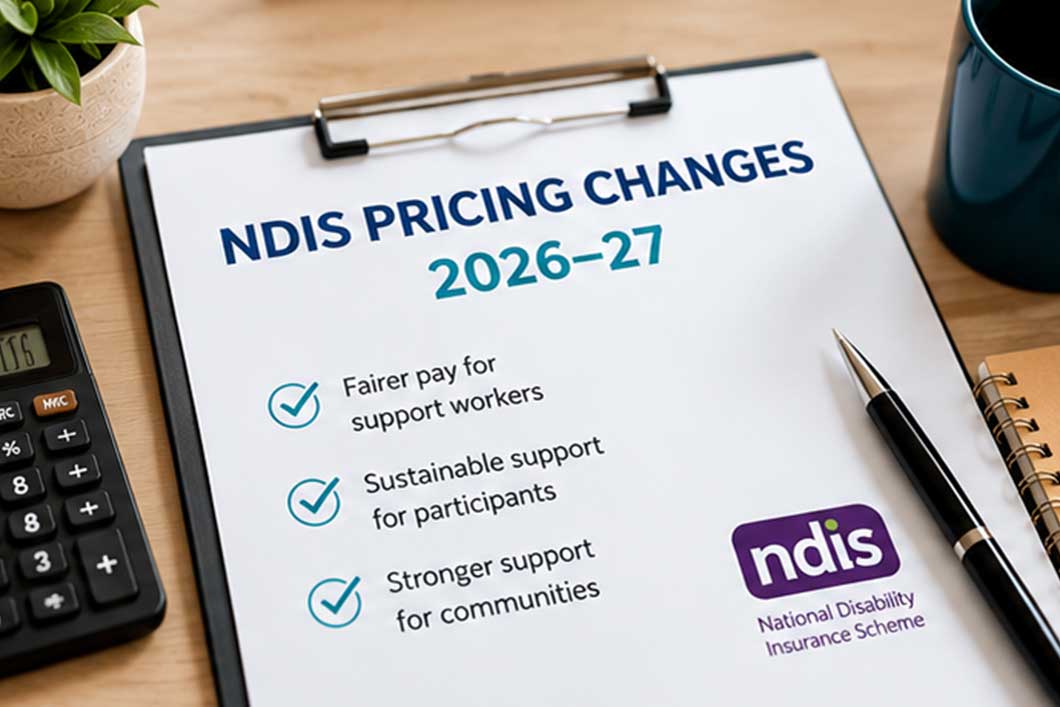

The new NDIS Pricing Schedule for 2026–27 starts from 1 July 2026. If you are an NDIS participant, family member, carer, nominee, or support coordinator, you may be wondering what this means for you.
The good news is that you do not need to understand every line item or pricing table. What matters most is knowing how the changes may affect your supports, your service agreements, and your NDIS funding.
This simple guide explains the key points in plain language.
The NDIS Pricing Schedule is a document released by the NDIA. It lists the maximum prices that can be charged for many NDIS supports.
This includes supports such as:
The pricing schedule helps make sure NDIS supports are priced in a fair and consistent way.
Not always.
The pricing schedule sets maximum prices for many supports. This means providers cannot charge above the listed maximum price for those supports.
However, providers do not always have to charge the maximum rate. Some providers may charge less. Others may update their prices from 1 July 2026 if their costs have changed.
The most important thing to remember is this: if your provider wants to change the price in your current service agreement, they must talk to you first. You need to agree before the change is made.
When a new pricing schedule starts, it is a good time to review your supports.
You may want to check:
You do not need to do this alone. You can ask your support coordinator, plan manager, nominee, family member, or provider to help explain things.
The 2026–27 schedule updates prices across many NDIS support categories. This includes disability support worker supports, high intensity supports, therapy, nursing, accommodation-related supports, and other labour-based supports.
For many participants and families, the most noticeable areas may include:
Disability support worker rates
The schedule includes different rates depending on when support is delivered.
For example, weekday daytime support is different from evening, night, Saturday, Sunday, public holiday, and sleepover support.
This means the time and day of your support can affect how much is claimed from your NDIS plan.
High intensity support
High intensity support usually applies when a participant has more complex support needs.
This may include health-related support, complex personal care, behaviour-related support, or other higher-risk support needs.
If a provider says a support is high intensity, you have the right to ask why, what training the worker has, and how this support relates to your needs.
Community participation and skill development
Community access and social participation supports continue to be important parts of many NDIS plans.
These supports should not just be about “going out.” They should help you build confidence, independence, friendships, communication skills, life skills, and connection with your community.
Therapy and specialist supports
The schedule includes pricing for therapy and specialist supports, including direct service, non-face-to-face work, provider travel, cancellations, reports, and telehealth.
Before agreeing to therapy supports, it is okay to ask what you will be charged for and how each activity helps your goals.
A good provider should explain pricing clearly and respectfully.
Your provider should:
You should never feel rushed or confused when discussing your NDIS supports.
Here are some helpful questions participants and families can ask:
These are reasonable questions. A trustworthy provider should be happy to answer them.
If you are plan managed, your plan manager may help check invoices and make sure claims are within the NDIS pricing limits.
However, your plan manager may not always know whether the support was delivered exactly as described. That is why it is still important for you and your family to check service agreements, shift times, and invoices where possible.
If something does not look right, ask questions early.
If you are self-managed, you may have more flexibility in how you pay for supports. However, you still need to make sure your supports are reasonable and necessary, related to your disability needs, and connected to your NDIS goals.
It is a good idea to keep clear records, invoices, receipts, and notes about how supports help you.
Price changes can sometimes make families worry that funding will run out faster.
If this happens, speak with your support coordinator, plan manager, local area coordinator, or NDIA planner if needed.
You may need to review:
Do not wait until funding is almost finished. It is better to ask for help early.
The NDIS Pricing Schedule 2026–27 is important, but you do not need to understand every detail.
The key things to remember are:
NDIS pricing can feel confusing, especially when there are many line items, rates, and support categories. But at the centre of every NDIS plan is a person, not a price list.
Your supports should help you live with more choice, confidence, independence, and dignity.
At Mission Ability, we believe participants and families deserve clear communication, honest guidance, and support that feels personal, safe, and human.
If you are unsure about what the new pricing schedule means for your supports, it is okay to ask. The right provider will take the time to explain things clearly and help you feel confident in your choices.